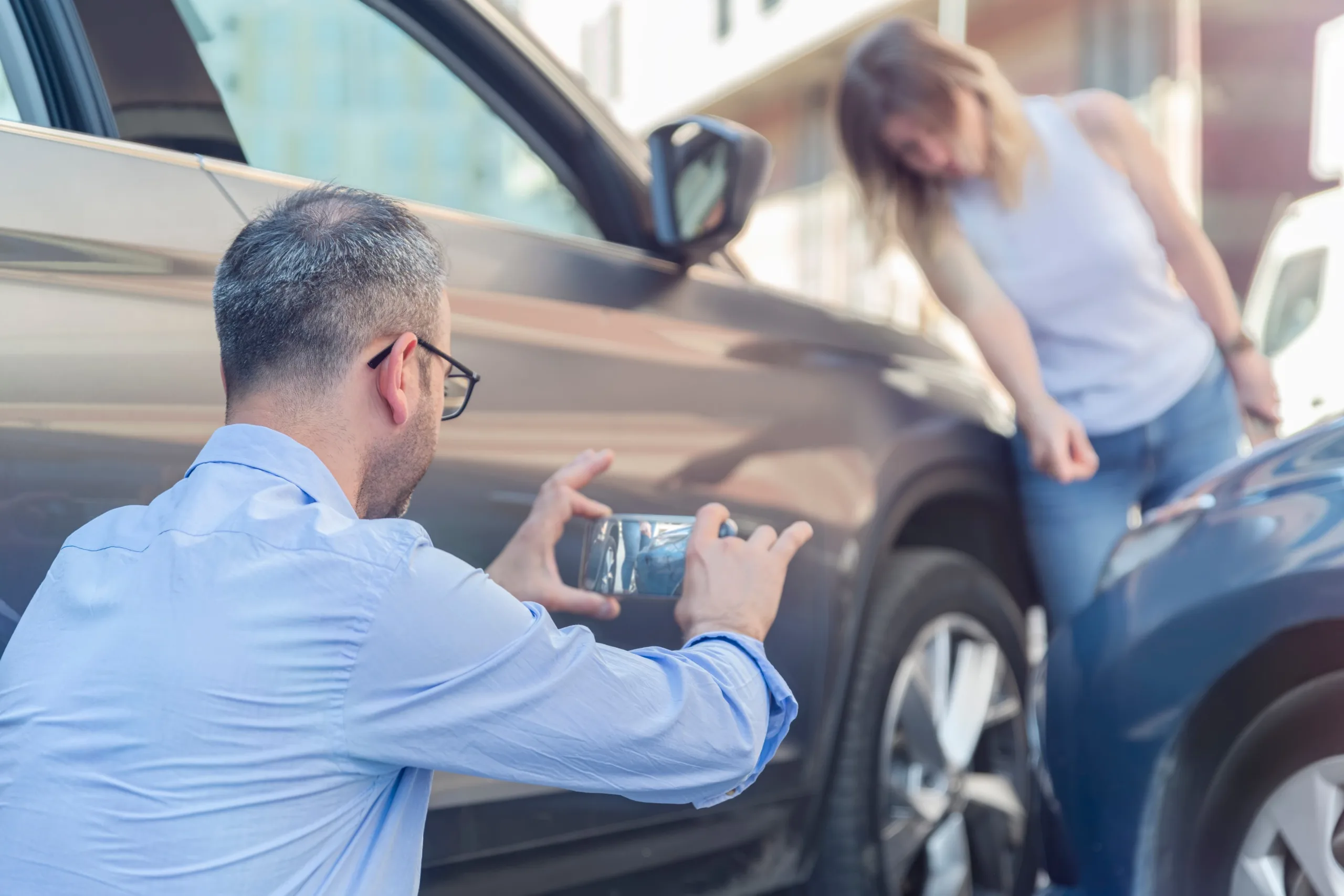
A friend borrows your car and causes an accident. So, who’s responsible–you because you own the car, or your friend because they were driving?
Or maybe you’re on the other side of the crash. The person who hit you wasn’t driving their own vehicle, and now you’re trying to figure out whose insurance company should pay your medical bills and property damage.
The answer isn’t always as simple as the name on the registration.
In Washington, the negligent driver is generally responsible for the harm they cause. But under certain circumstances, the car owner, or even an employer or another party, may also be liable. Figuring out car accident liability means looking at who was driving, why they had the vehicle, whether they had permission to use it, and whether anyone else contributed to the accident. An experienced car accident attorney can investigate, so you aren’t left relying on an insurance company’s version of who should pay.
Here’s how it works.
Is the Driver Responsible for an Accident if They Don’t Own the Car?
Usually, yes.
Every driver has a duty of care to operate a vehicle reasonably and safely. If someone causes an auto accident because they were speeding, distracted, driving under the influence, or otherwise negligent, the fact that they borrowed the vehicle does not erase their driver liability.
For example, imagine your neighbor gives you permission to borrow their truck for the weekend. You run a red light and hit another vehicle. You may be the at-fault driver even though your neighbor is the registered owner.
When a vehicle is involved in a collision, two distinct legal concepts come into play: financial responsibility for the vehicle itself and legal fault for the negligent driving. People often assume that the person who caused the mistake pays the bill. In everyday life, if you drop someone’s vase, you replace it. But auto insurance and tort law operate under a different set of rules.
So, identifying the negligent driver is only the beginning. The next question is often: Whose insurance coverage applies?
The Golden Rule: Insurance Follows the Car, Not the Person
In most car accident claims, the vehicle’s primary insurance coverage takes center stage first. The driver’s personal insurance policy usually acts as a backup plan.
However, if the owner was reckless in handing over the keys, or if the driver took the car without permission, the legal responsibility can shift dramatically. To figure out who covers the bill, you have to look at how insurance policy contracts intersect with state negligence laws.
Many auto insurance policies provide coverage when another person is driving the insured vehicle with the owner’s permission. This is commonly called permissive use. Permission does not necessarily have to be given immediately before every trip; depending on the facts and policy language, questions can also arise about implied permission.
That doesn’t mean every person who gets behind the wheel is automatically covered. Policies can contain exclusions and other restrictions, so the insurance company will typically investigate who was driving and whether that person was authorized to use the vehicle.
Washington requires drivers to maintain minimum liability insurance of $25,000 for injury or death to one person, $50,000 for injury or death to two or more people, and $10,000 for property damage. Those minimum policy limits can become especially important when an accident causes serious injuries.
This is one reason a car accident lawyer may look beyond simply asking, “Who hit you?” They may also investigate who owned the vehicle, what auto insurance policies apply, and whether other parties are liable.
The fundamental principle of standard motor vehicle coverage: insurance follows the car, not the person.
When the Driver’s Personal Insurance Steps In as Secondary Coverage
What happens when your friend causes an accident that results in $50,000 worth of damage, but your primary policy’s property damage liability limit stops at $25,000? This is where the driver’s insurance policy comes in.
The driver’s personal auto insurance acts as secondary or supplemental coverage. It does not replace the owner’s policy; instead, it sits in reserve behind it. Once the primary policy’s limits are completely exhausted, the secondary policy kicks in to absorb the remaining legal bills and damages, up to the driver’s own policy limits.
If neither policy carries enough coverage to meet the total losses, both the driver and the owner could face personal financial exposure.
When Can the Car Owner Be Liable for an Accident?
Simply owning a car does not necessarily make someone responsible for everything another person does behind the wheel.
There are, however, circumstances under Washington state car accident laws where owner liability may apply.
Car Owner‘s Direct Liability
- Negligent Entrustment: Handing keys to an unsafe driver
- Vicarious Liability: Family Purpose Doctrine / Agency Law
- Employer Liability: Driver acting within scope of employment
Negligent Entrustment: Handing keys to an unsafe driver
Negligent entrustment occurs when a vehicle owner knowingly hands their keys to someone who poses an unreasonable risk to others. You have a legal duty to exercise reasonable care when letting others manage a heavy, potentially dangerous machine like a car.
To prove negligent entrustment, an injured party must generally demonstrate four things:
- The owner granted permission to the driver.
- The driver was incompetent, unlicensed, reckless, or impaired.
- The owner knew or reasonably should have known that the driver was unsafe.
- The driver’s incompetence or negligence caused the accident.
For instance, if you lend your sports car to a friend who is visibly intoxicated at a party, or to a relative you know currently holds a suspended license for reckless driving, you have committed negligent entrustment. In the eyes of the law, your careless decision to hand over the keys is a direct cause of the harm that follows.
Vicarious Liability: Family Purpose Doctrine / Agency Law
Washington also recognizes what is known as the family car doctrine.
Under this rule, a parent or other person who owns, provides, or maintains a vehicle for the customary use of family members may, under certain circumstances, be responsible when a family member negligently causes an accident while using it with express or implied consent. Washington courts describe this liability as arising from principles of agency rather than from the family relationship alone.
That distinction matters. A parent isn’t automatically liable simply because their child caused a car accident. Courts may look at who actually owned, paid for, maintained, and controlled the vehicle; why it was provided; who regularly used it; and whether the driver had permission.
Employer Liability: Driver acting within scope of employment
What if the driver was working at the time? A company vehicle adds another layer. If an employee causes an accident while acting within the scope of their employment, the employer may potentially bear vicarious liability for the employee’s negligence. Depending on the circumstances, there could also be separate questions about an employer’s own conduct, such as whether it negligently hired or retained the driver.
Consider a delivery driver who causes a collision while making deliveries for work. The driver may have caused the crash, but the employer’s relationship to the driver and the trip can make the company another potential party in the car accident claim.
This is why serious motor vehicle accidents involving commercial or company vehicles can require more investigation than an ordinary two-car crash.
Explicitly Excluded Drivers on the Insurance Policy
Insurance policies are legal contracts, and policyholders can explicitly exclude specific individuals from their coverage. This is often done to lower insurance premiums—for example, removing a household teenager with multiple speeding tickets or a partner with a history of driving under the influence.
If a named excluded driver takes the wheel and causes an accident, the insurance company will deny the claim outright. Because the insurer has no contractual obligation to pay for damage caused by an excluded individual, primary coverage disappears. The driver becomes personally liable for every dollar of property damage and medical expenses, alongside any personal insurance policies they might carry independently.
Stolen Vehicles and Non-Permissive Driving
An owner cannot be held responsible for the actions of someone who takes their car without permission. If a thief hotwires your vehicle or steals your keys from your gym locker and subsequently crashes into another vehicle, you do not owe damages to the victims of that crash.
Because non-permissive driving voids the standard “permissive use” coverage for the crash victim’s third-party claims, the thief’s actions fall outside your liability coverage. Your auto policy’s comprehensive coverage will generally pay to repair the damages done to your own stolen car, but liability for the other driver’s injuries rests squarely with the thief.
What Happens When More Than One Person Is Responsible?
Sometimes there isn’t just one at-fault party.
Washington uses a comparative fault system. Under state law, a person’s compensation can be reduced in proportion to their own percentage of fault, rather than being automatically barred because they share some responsibility for what happened.
For example, an investigation might find that one driver caused most of a collision, but another driver’s actions also contributed. Or the driver may be negligent while a vehicle owner, employer, or another party bears separate responsibility.
Determining comparative negligence can therefore be an important part of a personal injury case, particularly when several people or companies may share fault.
Real-World Scenarios: Who Pays What?
To see these principles in action, let’s look at three practical scenarios that unfold every day.
Scenario 1: Lending Your Car to a Friend for a Quick Errand
The Setup: You let your friend, Sarah, borrow your car to pick up groceries. While turning left at an intersection, she misjudges oncoming traffic and hits another vehicle, causing $15,000 in damage and minor injuries to the other driver.
The Breakdown: Because you gave Sarah permission to drive, your primary auto insurance policy covers the crash under its permissive use clause. Your liability coverage pays for the other driver’s medical bills and vehicle repairs up to your policy limits.
Your collision coverage pays to fix your own car (minus your deductible). Sarah’s personal insurance policy remains dormant unless the damages exceed your policy’s limits.
Scenario 2: A Roommate Takes Your Vehicle Without Asking
The Setup: Your roommate, Mark, takes your car keys off the kitchen counter while you are sleeping to run to the store. You have explicitly told Mark in the past never to drive your car because he does not have a valid driver’s license. Mark runs a red light and causes a crash.
The Breakdown: This is a clear case of non-permissive use. Because you explicitly denied Mark permission and he took the keys without asking, your insurance company can contest primary liability coverage for the damages caused to the other vehicle.
Mark is personally responsible for the harm he caused. However, be prepared for an uphill battle with your insurer: insurance adjusters naturally presume that household members have implied permission unless you can provide clear evidence to the contrary, such as a prior written agreement or a formal police report for unauthorized use.
Scenario 3: Your Teenager Causes an Accident in the Family Sedan
The Setup: Your 17-year-old child, who lives at home and is listed on your family auto policy, gets distracted by their phone and rear-ends a stopped commuter vehicle.
The Breakdown: Because your teen is a listed driver on your policy, your auto insurance covers the loss directly as primary coverage. However, because your teenager is a minor living under your roof, you as a parent may also face direct personal liability under state parental responsibility laws or the Family Purpose Doctrine.
If the damages exceed your policy limits, the injured driver can pursue your personal assets to cover the shortfall.
Essential Steps to Protect Yourself as a Car Owner or Driver
Navigating auto liability requires proactive measures before you hand over your keys or step into someone else’s vehicle.
How to Correctly Structure Your Auto Insurance Coverage
Protecting your financial well-being requires designing an insurance policy that anticipates real-world risks:
List All Household Drivers: Ensure every resident family member or roommate who has access to your keys is explicitly listed on your policy. Concealing household drivers to get lower premiums can lead to an immediate claim denial after a crash.
Carry High Liability Limits: State minimum liability requirements (such as $15,000 or $25,000) are often inadequate for modern medical care and vehicle replacement costs. Raise your bodily injury and property damage limits as high as your budget reasonably allows.
Invest in an Umbrella Policy: If you own a home, have savings, or hold significant personal assets, purchase a personal umbrella policy. An umbrella policy provides an additional $1 million or more in liability protection that kicks in when your underlying auto policy limits are exhausted.
What to Do Immediately Following an Accident in a Borrowed Car
If you are involved in a collision while driving someone else’s vehicle, take these critical actions to safeguard your rights:
Prioritize Safety and Medical Needs: Check for injuries, move to a safe area if possible, and call emergency services right away.
Document Permissive Use Early: When exchanging information and speaking to law enforcement, clearly state that you had the owner’s explicit permission to drive the vehicle.
Gather Detailed Information: Collect insurance details for the vehicle you were driving, your personal auto insurance policy, and all other involved vehicles. Take photographs of the scene, damage, lane markings, and weather conditions.
Notify Both Insurance Companies Promptly: Report the accident to both the vehicle owner’s insurance provider and your personal insurance provider. Delaying notifications can give insurers a reason to contest coverage.
Avoid Premature Statements of Fault: Stick strictly to objective facts when talking to police and insurance adjusters. Never apologize or speculate on liability at the scene; allow the formal investigation to reveal what happened.
FAQ
Do I need an attorney if I was in a minor fender bender with no injuries?
Likely not. If the crash involved no injuries and minimal property damage, you can usually handle the claim directly with your insurer.
How long do I have to file an accident claim in Washington?
Washington law generally provides a three-year statute of limitations for actions involving injury to a person or personal property. However, different deadlines or procedural requirements can apply in some circumstances, including claims involving government entities.
Waiting can also make it harder to preserve evidence and determine what happened. If you’re unsure who may be financially responsible for your accident, speaking with a personal injury lawyer earlier gives them more time to investigate the people, vehicles, and insurance policies involved.
How do you determine who is liable after a car accident?
If you’ve been injured by someone driving another person’s car, don’t assume there is only one possible insurance policy or responsible party.
A car accident attorney can investigate the relationships between the driver, owner, vehicle, and available insurance coverage. That may include reviewing the police report, insurance policies, vehicle registration, witness statements, employment records when relevant, and evidence showing whether the driver had permission to use the vehicle.
That investigation can help answer several different questions at once: Who caused the accident? Who may legally be held responsible? And which insurance policies may provide compensation for the injuries and losses that resulted?
Those answers can make a significant difference when medical bills and other damages exceed one policy’s limits.
Disclaimer: This blog is for informational purposes only and does not constitute legal advice. For specific legal concerns, consult with a qualified attorney.